Explore a craft steeped in tradition.
First Foray into Damascus
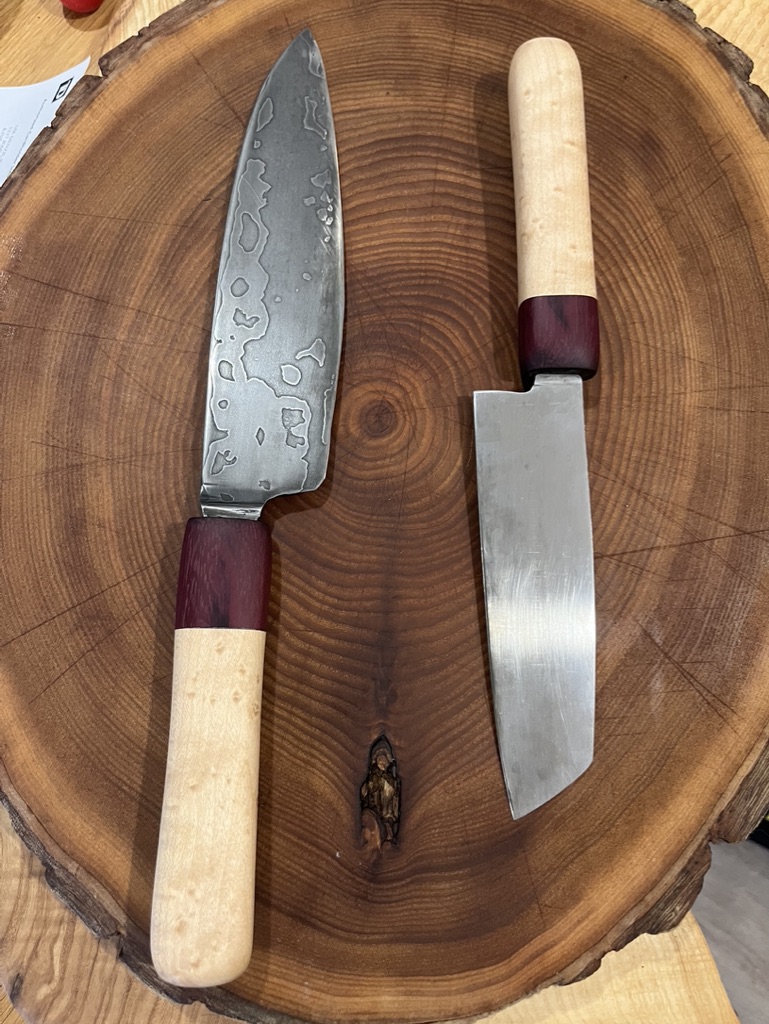
High Carbon Chef with Cocobolo
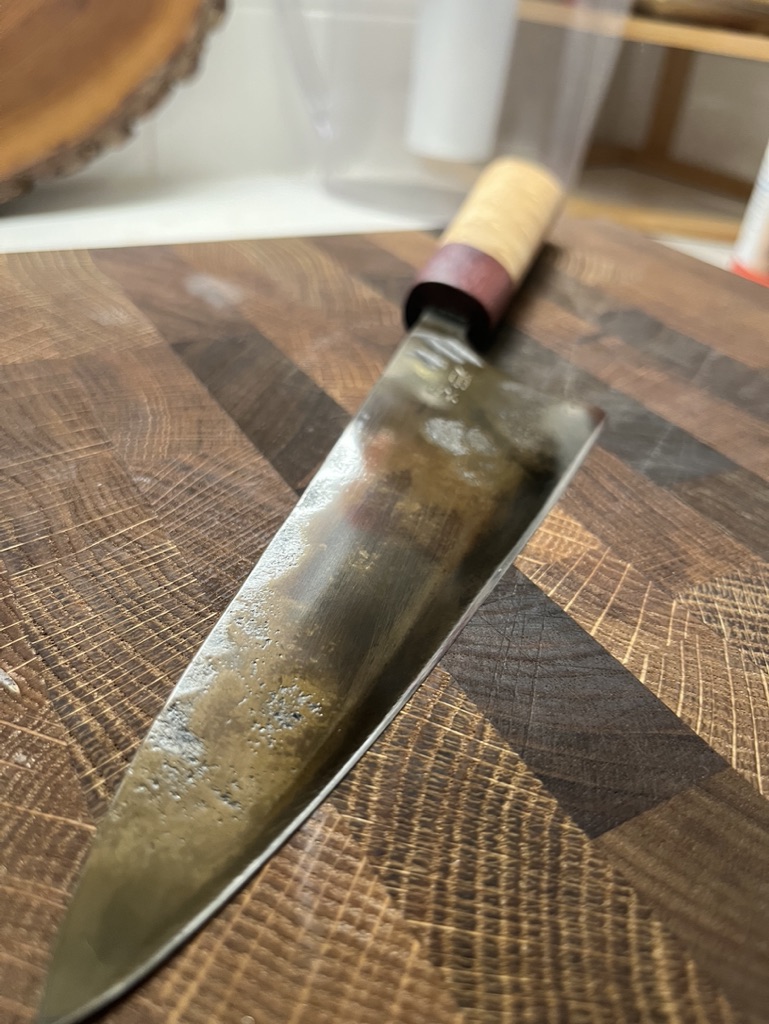
Forged Petty with Bird’s Eye Maple
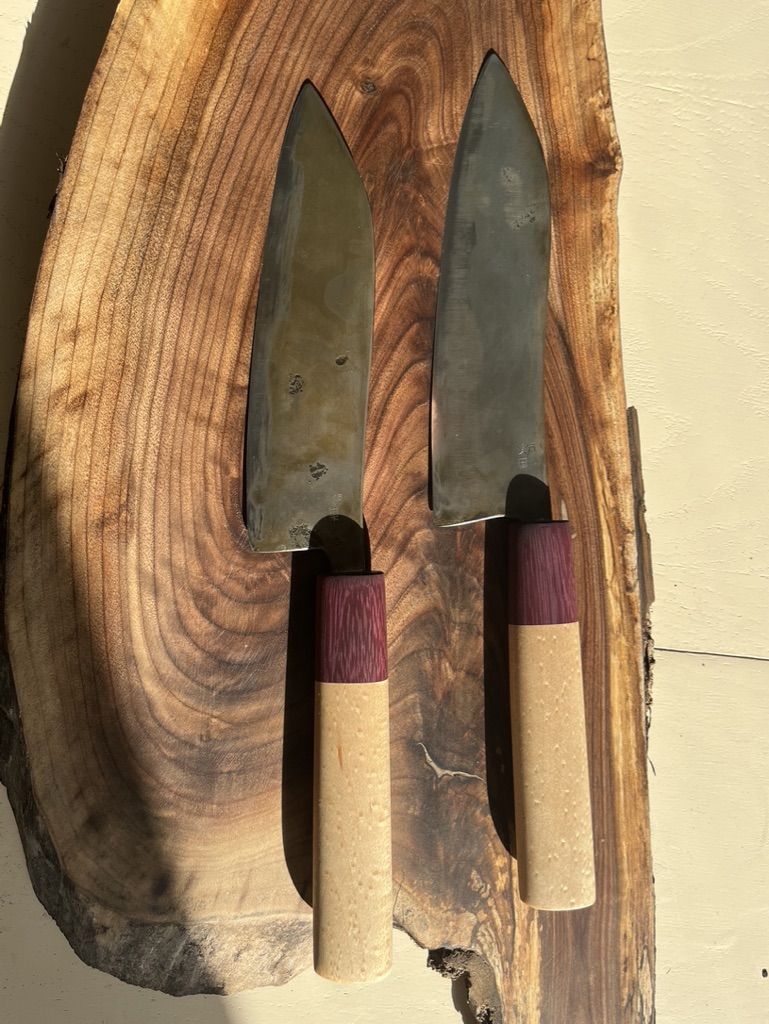
Santoku Pair
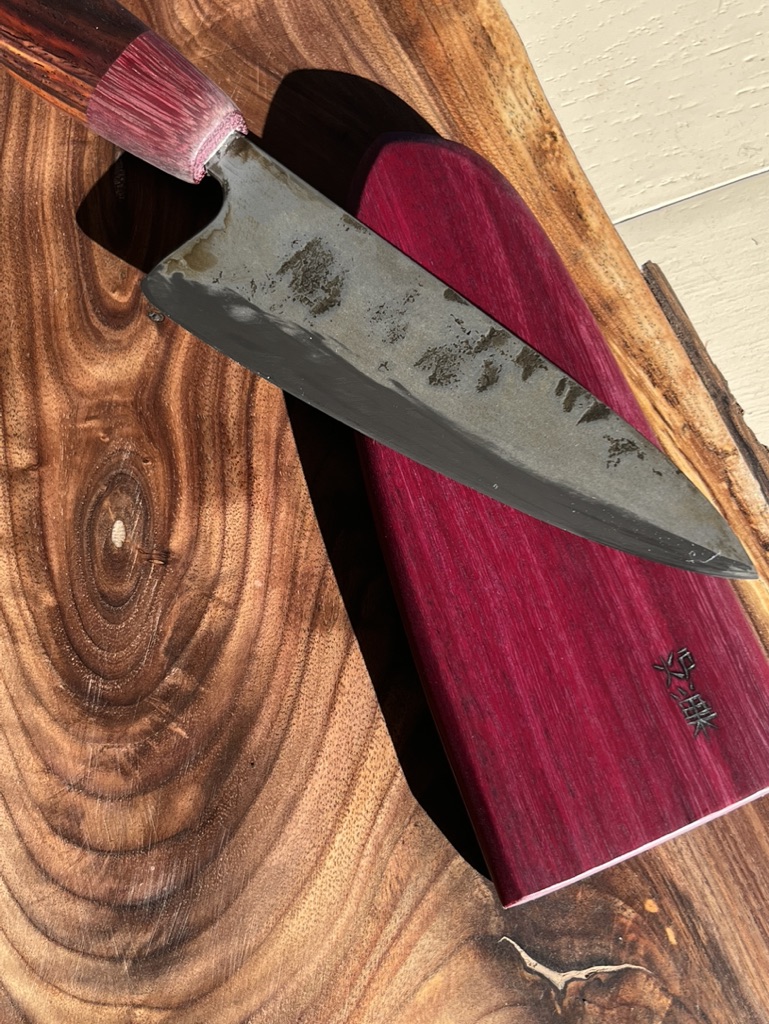
High Carbon Petty with Purple Heart Saya
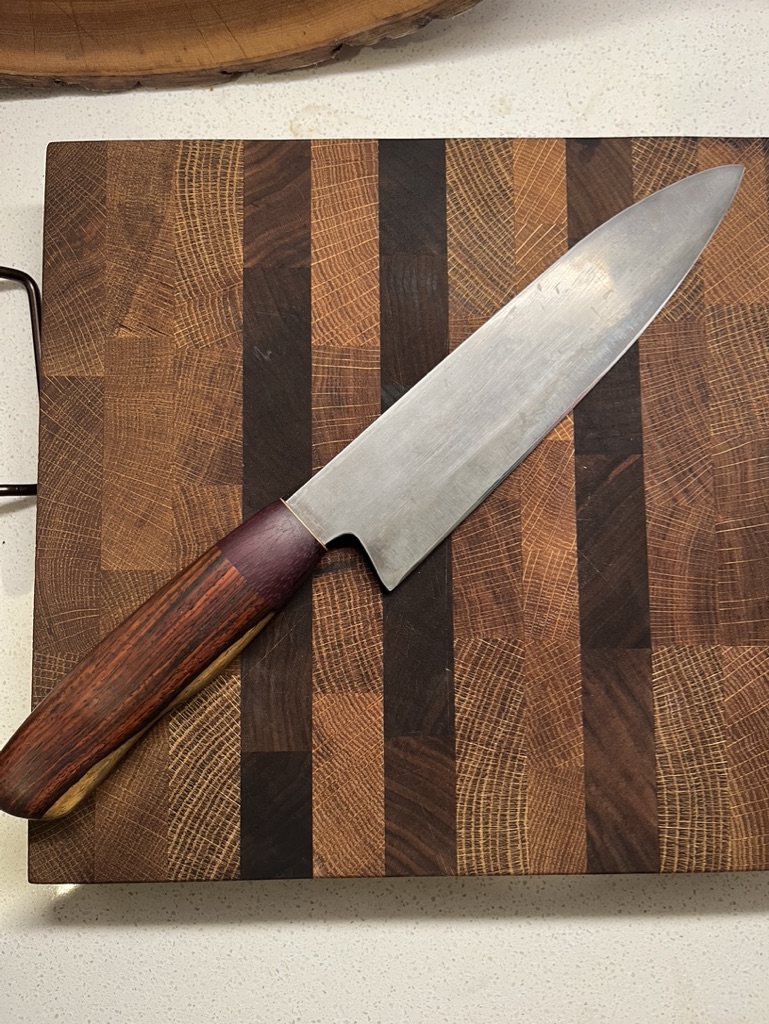
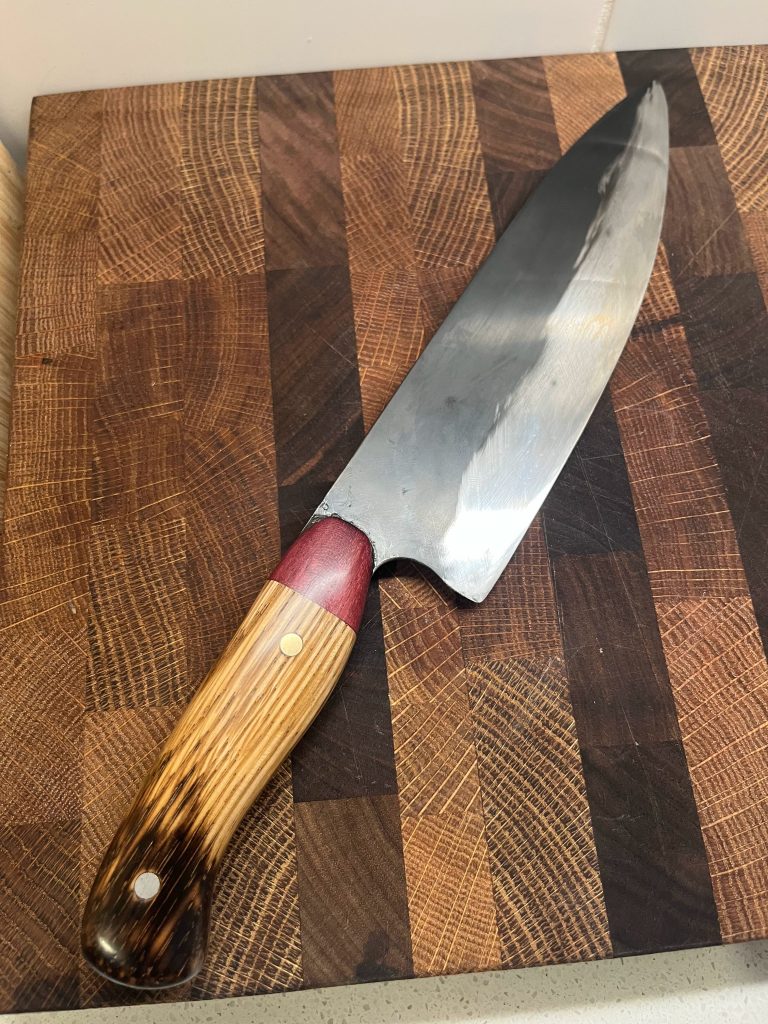
Full Tang European Chef
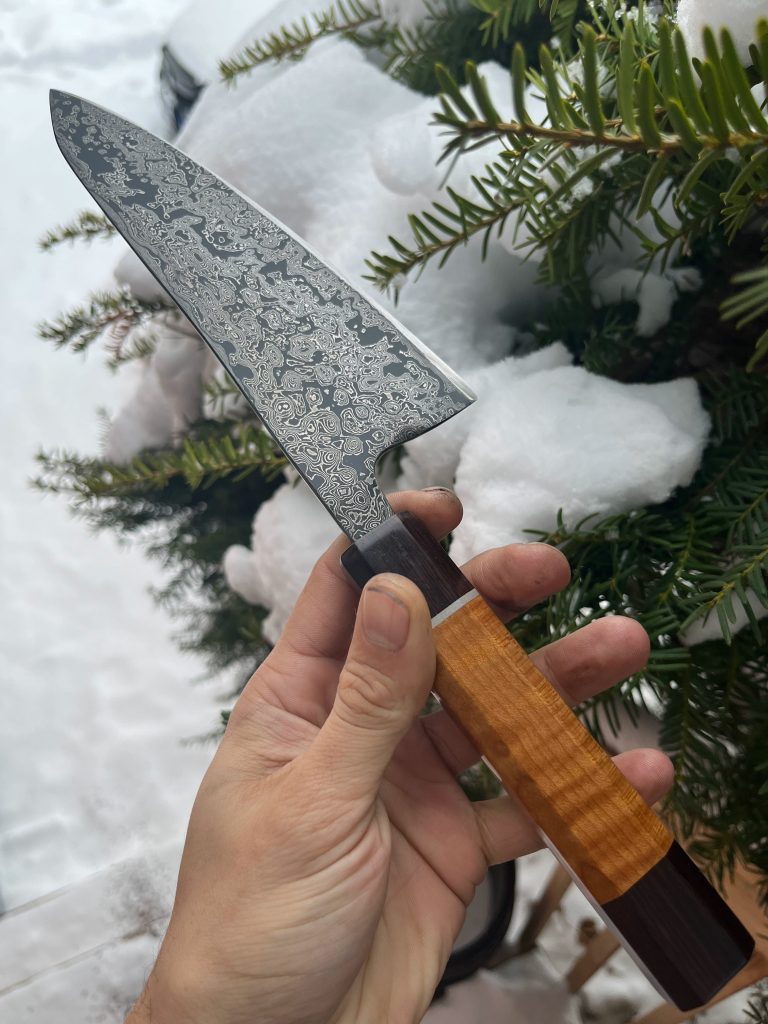
Raindrop Damascus with Maple and Wenge
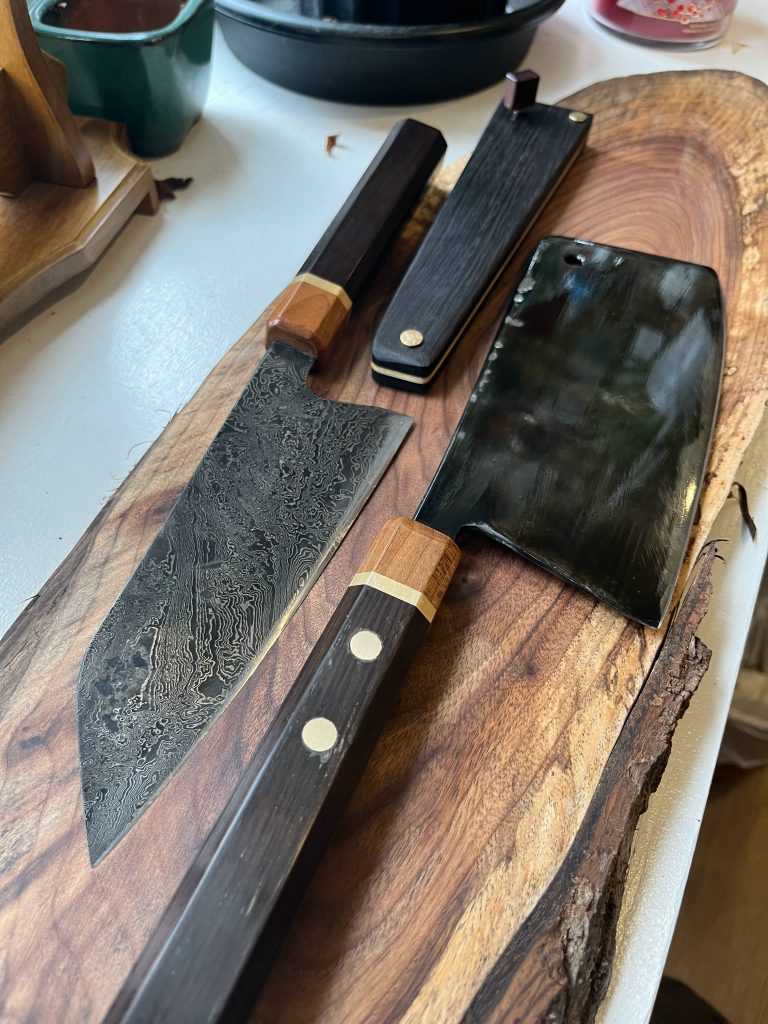
Cleaver and Santoku Pair in Wenge and Maple
My Process
My process for making a knife: I start each piece with cleaning, planning and layout. Then I move to the forging process; all forging is done by hand with hand hammers, various tools, and a trusty anvil. I will shape the piece as close to final dimensions as possible to limit time with hand files and grinders. Once my pre-form shape is forged out, I then take hand files and finalize the profile and details. I then heat treat my steel to remove residual stresses and to achieve desired hardness, this step finishes up with a tempering, this causes the metal to become tougher and less brittle. The steel is then ground and hand sanded to the desired finish, and etched if desired. Finally the fit and finish; this step is a classic 80/20 rule, it’s the last 20% of a piece that takes 80% of the time. It is such an important step to not rush as this is where the art and details of the work shine.
Some of the blades I have made were forged from pattern welded steel, commonly known as Damascus steel. This is a complicated process that takes multiple metals or metal with inconsistent carbon content and layers them to homogenize carbon content and create stunning patterns. These patterns appear with such contrast as the steels generally will have different alloying metals or hardnesses. For example; steel with nickel in it will appear a shiny silver even after etching, whereas a simple carbon steel will appear much darker grey or black. Damascus steel uses much more time, labour and material than traditional mono-steel blades, this is reflected in my availability, and pricing of Damascus steel projects.
The carbon content in steel plays a major role in determining how hard, strong, and durable the metal is. Mild steels, which have a low carbon content (usually below 0.3%), are softer, easier to shape, and commonly used for construction or tools that don’t need to hold a sharp edge. As the carbon level increases into the medium range (around 0.3–0.6%), steel becomes stronger and can take a moderate edge while still being somewhat flexible. High carbon steels (about 0.6–1.0%) are much harder and can be heat-treated to hold a very sharp edge, making them ideal for knives, chisels, and cutting tools. However, the higher the carbon, the more brittle and rust-prone the steel can become, so knife-makers must carefully balance hardness, toughness, and maintenance when choosing the right steel for their blades.
Traditionally, Japanese smiths made high carbon steel through a process called tatara, smelting iron sand with charcoal to create tamahagane, a bloom of high-carbon steel used for samurai swords and fine blades. In Europe, blacksmiths produced high carbon steel by repeatedly heating wrought iron with charcoal in a forge, allowing carbon to diffuse into the metal and form a hard, steel layer suitable for weapons and tools.
Modern high performance cutlery, tools and knives are generally made with various alloys of high carbon steel, this ensures consistent and desirable properties for projects that require more precision or specific characteristics of the metal.

